

The Met Gala has become one of the most anticipated and extravagant displays of celebrity culture each year. The 2025 event, themed “Superfine: Tailoring Black Style,” saw celebrities descending on the red carpet with outfits ranging from symbolic artistry to ostentatious absurdity. While the official narrative emphasized cultural celebration and fashion as art, a deeper spiritual lens reveals something far more troubling: the glorification of humanity above God.
Fashion becomes sacrament. The red carpet becomes altar. Celebrities are both priests and idols in a religion of self-exaltation. This is not art in service of truth; it is art in service of ego.
For Christians, the warning is clear: “Be not conformed to this world, but be ye transformed by the renewing of your mind” (Romans 12:2). The call to holiness means resisting the gravitational pull of such spectacles and remembering that our worth is not found in appearance, popularity, or possessions—but in Christ alone.
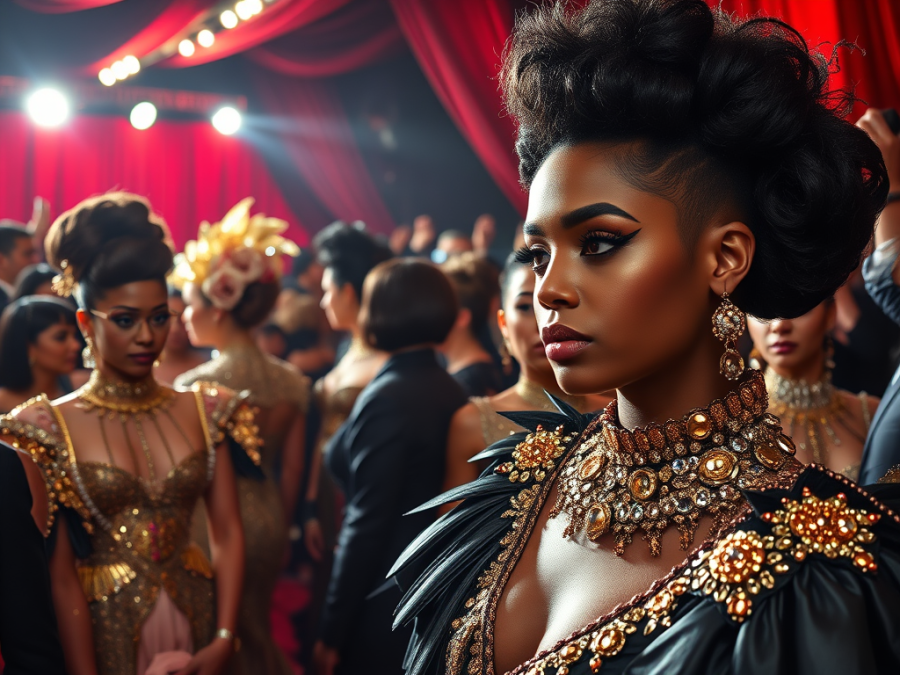
On the surface, the 2025 Met Gala dazzled. Celebrities strutted down the red carpet in custom couture, gold-threaded gowns, and experimental art-wear for this year’s theme: “Superfine: Tailoring Black Style.” But behind the glamor and flashing lights lies something far deeper—and darker—than fashion. What unfolded was not simply a celebration of design but a display of modern humanism, pride, and spiritual blindness.
From Red Carpet to Golden Calf
In Scripture, Babylon was a city of splendor, decadence, and defiance. It symbolized humanity’s ambition to ascend apart from God—to glorify self over the Creator. The prophet Isaiah describes it as “the glory of kingdoms” that will become desolate (Isaiah 13:19). In Revelation 18:3, John echoes that its fall will come because “all the nations have drunk of the wine of her fornication.”
This year’s Met Gala was a mirror of that ancient spirit. While some designers used fashion to honor heritage, others used it to elevate ego and spectacle. Doja Cat arrived with a towel wrapped around her body and mascara streaming down her cheeks—an ironic portrayal of brokenness that still demanded center stage. Kim Kardashian paired a steel corset with a gray cardigan, mixing bondage motifs with casual indifference. Others arrived in gender-blurring costumes, feathered headpieces, and robes that screamed power, excess, and sexual ambiguity.
What does all this have to do with Babylon? Everything. Just as Babylon was a center of idolatry and pride, the Met Gala has become a kind of high church of celebrity, where stars worship each other and the image of themselves.
Humanism in High Fashion
Theologian Francis Schaeffer warned that when man rejects God, he doesn’t cease to worship—he simply redirects his worship toward himself. The Met Gala exemplifies this: a celebration not of God-given beauty but of self-created glory. The apostle Paul wrote in 2 Timothy 3:2-4:
“Men shall be lovers of their own selves… proud, blasphemers… lovers of pleasures more than lovers of God.”
Indeed, the gala was not just an aesthetic event—it was a modern tower of Babel, an ascent of man clothed in designer fabrics, proclaiming autonomy from the divine.
Celebrities who openly mock Christianity or promote alternative spiritualities were on full display. Many embrace occult symbolism, manifesting rituals, or hyper-individualism—the liturgies of a culture that no longer seeks transcendence but finds divinity in fame, fortune, and filtered images.
A Warning from Revelation
In Revelation 18, Babylon is judged not for her architecture or her riches, but for her spiritual harlotry:
“She glorified herself and lived in luxury… therefore in one day her plagues will overtake her: death, mourning and famine” (Revelation 18:7-8).
The Met Gala, with its $50,000 tickets and diamond-crusted fabrics, is a cultural Babylon—one that celebrates indulgence while ignoring the hungry, the broken, and the God who gives breath to its participants. The spiritual blindness is tragic. Many of these individuals are not evil in appearance—but deceived in spirit.

Come Out from Among Them
As Christians, we are not called to rage against culture for the sake of outrage. But we are called to discern. To see behind the fabric and beneath the glamor. To test the spirits (1 John 4:1). The Met Gala isn’t evil because of fashion—it’s dangerous because it promotes a worldview in which man is central and God is excluded.
Paul reminds us in Romans 12:2:
“Do not conform to the pattern of this world, but be transformed by the renewing of your mind.”
We saw no prayers on the red carpet. No recognition of the Creator. No humility. Only curated splendor and the echo chamber of peer worship. Many of these same celebrities openly deny Christian faith, while publicly embracing New Age beliefs, astrology, and radical self-actualization—religions of the self, not of God.
The 2025 Met Gala showed us a world desperately trying to make itself holy through clothing, identity, and spectacle. But holiness doesn’t come from a runway. It comes from repentance, humility, and the cross.
This is not about judging individual souls, but about discerning spirits (1 John 4:1). The Met Gala is not just cultural entertainment—it is a spiritual litmus test. It reveals what our culture esteems: fame without substance, wealth without wisdom, and beauty without holiness.
Let us watch, pray, and speak truth—not to condemn, but to call out to those trapped in a glittering Babylon that is destined to fall.

 R-Rated Religion
Amen to your comments, sir.
I run with a crowd where modesty of attire for both men and women is a priority. Maybe it’s because my father was a tailor and my mother a seamstress that I subscribe to the notion that “clothes make the man (or woman).”
LikeLiked by 1 person