
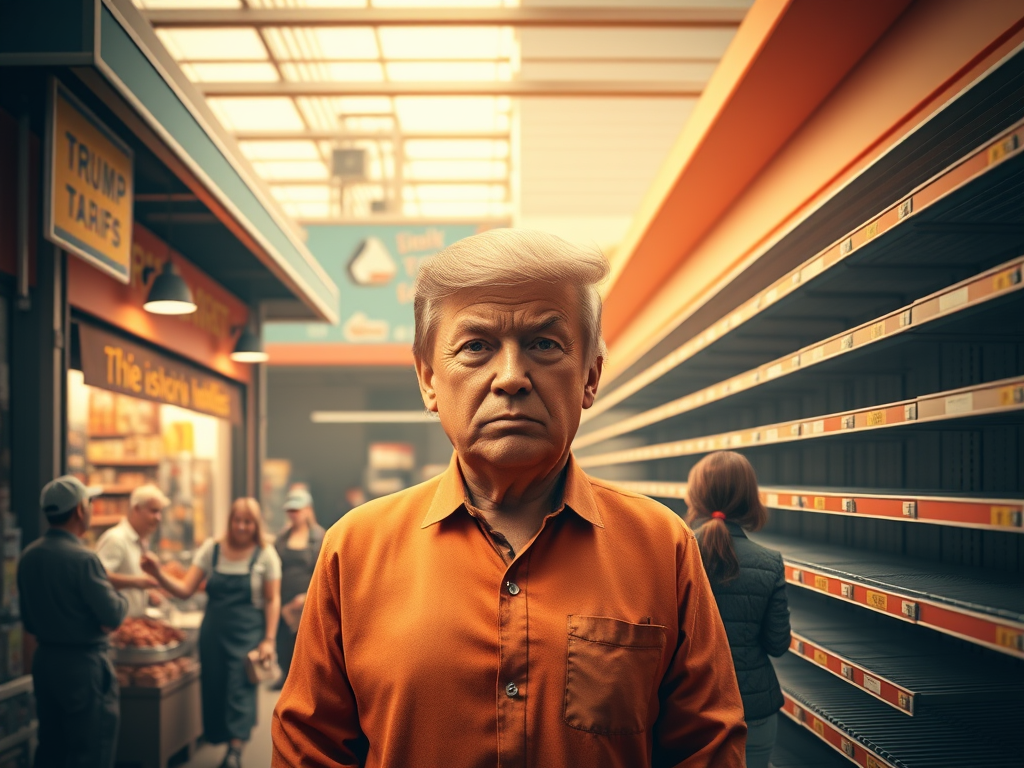
Society is rife with alarmist commentary about Trump’s new tariff policies. Let’s not forget that he has been openly expressing his support for tariffs for over thirty years, but that’s beside the point. Trump made it clear during his campaign and throughout his previous administration that he intended to implement these tariffs. Despite this, journalists and political pundits continue to stoke “Trump Derangement Syndrome” (TDS) among a significant portion of the population, predicting disastrous outcomes tied to Donald J. Trump’s actions. We all have heard this tune before.
But we Christians walk a separate path of hope and joy in the knowledge that this life is but an audition for the glorious (or not so) life to come. It is out of this worldview in the divine providence of God that I write this message today. As faithful Christians, it is imperative that we not succumb to the fear and greed that all this tariff falderal is ginning up in society. Let Trump be Trump and have confidence in God’s sovereignty.
Understanding Tariffs and Their Historical Use
A tariff is a tax imposed by a government on imported goods. Historically, tariffs have been used to protect domestic industries from foreign competition. They also generate revenue for the government. Additionally, tariffs influence trade policies. These financial measures can affect the prices of goods and services, leading to broader economic implications. In ancient times, tariffs were employed by empires like Rome to fund their vast infrastructures and military campaigns.

Good and Bad Consequences of Tariffs
Positive Impacts
- Protection of Domestic Industries: Tariffs can shield local businesses from foreign competition, allowing them to thrive and expand. This protection can foster innovation and self-sufficiency within the nation.
- Revenue Generation: Governments can use the revenue generated from tariffs to fund various public services and infrastructure projects, such as roads, schools, and healthcare systems. This can lead to improved quality of life for citizens.
- Job Creation: By protecting local industries, tariffs can help maintain and create jobs within the country. This can reduce unemployment and contribute to economic stability.
Negative Impacts
- Increased Prices: Tariffs can lead to higher prices for imported goods, which can burden consumers. The increased costs can affect the overall purchasing power of individuals and families.
- Trade Wars: The imposition of tariffs can result in retaliatory measures from other countries, leading to trade disputes and economic instability. These trade wars can hinder global economic growth and cooperation.
- Reduced Choice: Consumers may face limited options as the availability of foreign goods decreases. This can result in a lack of access to certain products and diminished competition in the market.
The Biblical Perspective
Scriptural Guidance: “Give to Caesar What Is Caesar’s”

In Matthew 22:21, Jesus famously states, “Give to Caesar what is Caesar’s, and to God what is God’s.” This teaching reminds us that we have obligations both to our civic duties and to our spiritual commitments. As Christians, we are called to respect the laws and regulations of the land, including those involving tariffs, without letting them dominate our lives or our faith. Romans 13:1-2 also emphasizes this point, stating, “Let everyone be subject to the governing authorities, for there is no authority except that which God has established. The authorities that exist have been established by God. Consequently, whoever rebels against the authority is rebelling against what God has instituted, and those who do so will bring judgment on themselves.”1
Rejecting Greed and Embracing Trust in God

The Christian tradition emphasizes the importance of rejecting greed and trusting in God’s provision. Tariffs, while they may impact economic conditions, should not be a source of fear or anxiety for Christians. Proverbs 11:28 tells us, “Those who trust in their riches will fall, but the righteous will thrive like a green leaf.”2 Our faith in God’s provision and His guidance should supersede any material concerns, including those related to economic policies like tariffs. In Luke 12:15, Jesus warns, “Watch out! Be on your guard against all kinds of greed; life does not consist in an abundance of possessions.”3
God’s Providence: Comfort and Hope for Believers
God’s providence is a fundamental belief in Christianity that assures believers of His continual care and guidance. Romans 8:28 proclaims, “And we know that in all things God works for the good of those who love him, who have been called according to his purpose.”4 This verse highlights that, regardless of economic uncertainties such as tariffs, believers can find comfort and hope in the knowledge that God is orchestrating everything for their ultimate good. Trusting in God’s providence means recognizing His sovereignty and His loving provision, which brings peace to our hearts. Psalm 23:1, “The Lord is my shepherd, I lack nothing,”5 further reinforces the idea that God will provide for our needs.
Living Without Fear

The Bible consistently encourages us to live without fear. In Philippians 4:6-7, we are reminded, “Do not be anxious about anything, but in every situation, by prayer and petition, with thanksgiving, present your requests to God. And the peace of God, which transcends all understanding, will guard your hearts and your minds in Christ Jesus.”6 This scripture is particularly relevant when considering the potential impact of tariffs. Instead of succumbing to fear or greed, Christians are called to trust in God’s plan and His provision. Isaiah 41:10 also offers reassurance, “So do not fear, for I am with you; do not be dismayed, for I am your God. I will strengthen you and help you; I will uphold you with my righteous right hand.”7
Conclusion
Christians, guided by the teachings of the faith, should not be afraid of tariffs or other economic measures. Instead, believers should focus on their faith in God. They should reject greed. They should embrace the peace and provision that comes from trusting Him. By adhering to Jesus’ teachings, Christians can navigate economic challenges confidently. Living out the principles given to us by the Bible and historical tradition, we can manage these challenges with grace. James 1:5-6 reminds us, “If any of you lacks wisdom, you should ask God, who gives generously to all without finding fault, and it will be given to you. But when you ask, you must believe and not doubt, because the one who doubts is like a wave of the sea, blown and tossed by the wind.”8
Faith-based communities place their trust and faith in God, not in Donald J. Trump. Our worship is directed toward God, not the president. God establishes who is in leadership, and we are called to respect that leadership. We must do this unless it conflicts with Christ, who is the head of the Church. This provides us with hope—a steadfast light in the world, reminding us that ultimately, God is in control, not politicians. Therefore, I encourage everyone in my global Christian community to allow Trump to be himself for now and to put your faith in the one who truly holds authority: the Alpha and the Omega, the God of the Bible.
Footnotes
- Romans 13:1-2 (New International Version).
- Proverbs 11:28 (New International Version).
- Luke 12:15 (New International Version).
- Romans 8:28 (New International Version).
- Psalm 23:1 (New International Version).
- Philippians 4:6-7 (New International Version).
- Isaiah 41:10 (New International Version).
- James 1:5-6 (New International Version).
Bibliography
Holy Bible, New International Version. Grand Rapids: Zondervan, 2011.

 R-Rated Religion
>9 years later and still crying “TDS!!” over fucking anything
ngmi
LikeLike
The language isn’t necessary but I respect your right to it. TDS has little, to nothing, to do with this piece. It is as much as an indictment on those who blindly worship Trump, which I do not. However, “TDS” is real and many suffer from it, I am only concerned with those who claim to be a Christian and suffer from it.
LikeLike