
If you could meet a historical figure, who would it be and why?
Famous figures like Alexander the Great or Cleopatra dominate history books, but countless everyday individuals from antiquity remain nameless and forgotten. If we define “obscure” as someone barely known even to historians, with minimal personal details preserved, yet technically qualifying as a “historical figure” due to surviving records, one standout candidate emerges from the dawn of written history: Kushim, an ancient Mesopotamian accountant or administrator from around 3400–3000 BCE.
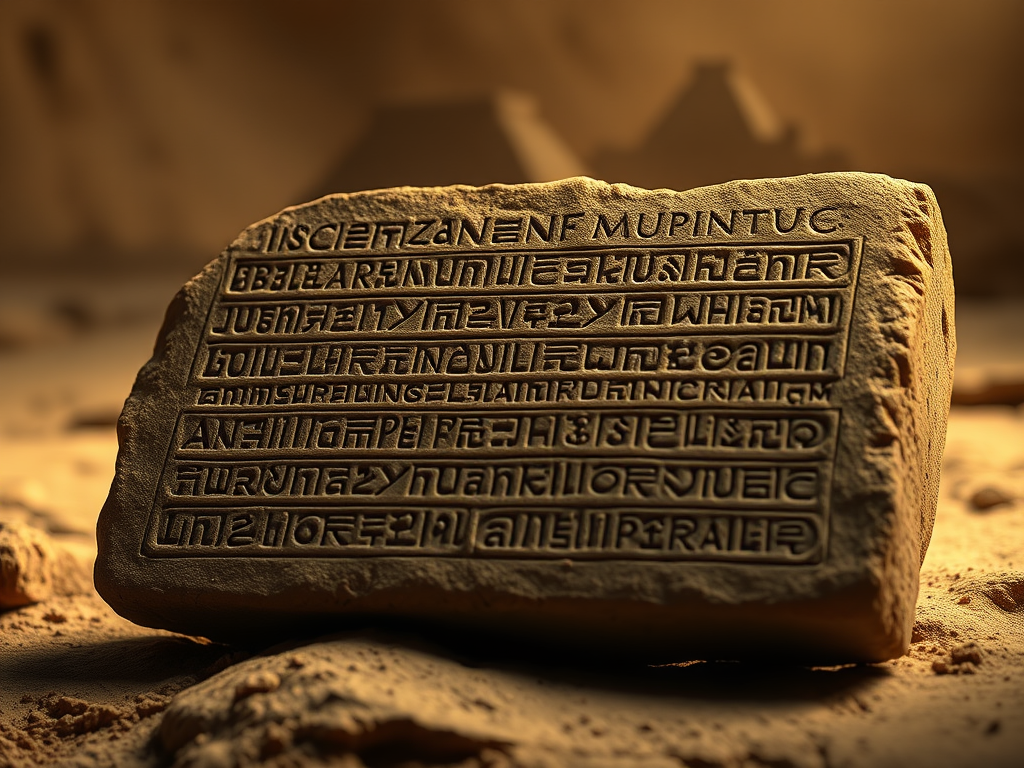
Kushim lived in the city of Uruk (near modern-day Samawah, Iraq) during the Uruk period, a time when early civilizations were developing complex economies and the first forms of writing. He is known solely from about 18 clay tablets inscribed with proto-cuneiform script, the precursor to full Sumerian writing. These tablets record mundane administrative transactions, such as deliveries of barley and beer to a brewery at the Temple of Inanna (the Sumerian goddess of love and war). For example, one tablet details “134,813 litres of barley to be delivered over 37 months to the government official Kushim responsible for the brewery at the Inanna Temple in Uruk.” Kushim’s name—rendered as the symbols “Ku” (a horizontal stroke) and “Šim” (a downward-pointing arrow)—appears consistently as a signature or mark vouching for the accuracy of these records. There’s debate over whether “Kushim” was a personal name or a title (possibly related to “barley”), but most scholars accept it as identifying a specific individual, often preceded by “Sanga,” a known term for a temple administrator.
What makes Kushim the epitome of obscurity? Unlike pharaohs, warriors, or inventors who left legacies of conquest or innovation, Kushim was an ordinary bureaucrat in a burgeoning society—essentially the ancient equivalent of a mid-level accountant tracking grain shipments. We know nothing of his personality, family, appearance, or any personal achievements; his existence is reduced to these transactional scribbles on clay, preserved by sheer archaeological luck in the ruins of Uruk. He had no grand story, no monuments, and no influence on events that shaped empires. In fact, his “fame” today stems only from being the earliest surviving personal name in written records, marking the birth of individualized history amid anonymous masses. Without these tablets, he’d be as forgotten as billions of prehistoric humans. This highlights how history favors the powerful or infamous, leaving everyday people like Kushim in the shadows—yet his obscurity underscores the humble origins of civilization itself, where writing first emerged not for epics, but for bookkeeping.
While other candidates—like Ea-Nasir (another ancient Mesopotamian merchant known only from a complaint letter) or Roger Fuckebythenavele (a 14th-century English criminal remembered for his vulgar nickname)—are similarly niche, Kushim edges them out due to his extreme antiquity and the utter lack of narrative around his life. He’s not obscure because of deliberate erasure (like Herostratus, the arsonist whose name was banned after destroying the Temple of Artemis), but because he was simply unremarkable in his time. In a world obsessed with celebrities of the past, Kushim reminds us that history’s true fabric is woven from the lives of the unknown.

 R-Rated Religion