
Part A – Theology of Family Ministry Strategy
Introduction
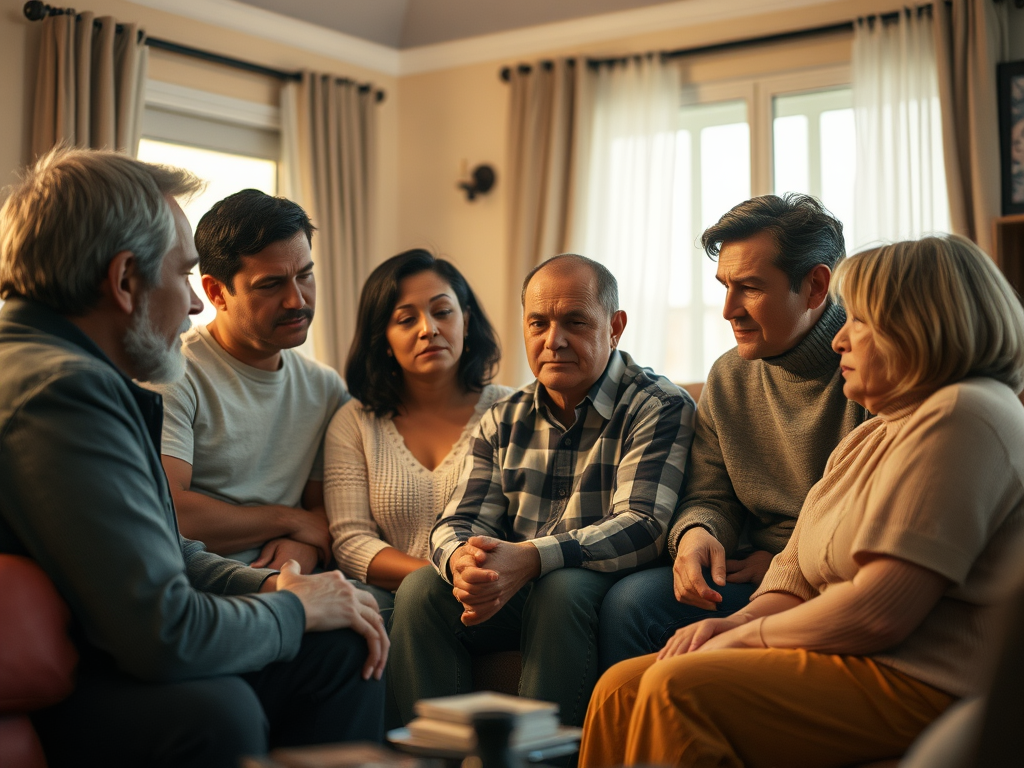
Alcoholism and alcohol abuse are a hindrance to the cohesiveness, peace, and overall health of the family structure, whether I will be immediate family or extended family relationships. “More than 10 percent of U.S. children live with a parent with alcohol problems, according to a 2012 study.”1 This number has likely risen in the past five years. “Addiction causes or worsens a vast array of medical, psychological, psychiatric, social, family, spiritual, academic, occupational, legal, and financial problems among individuals with addictions.”2 Alcohol abuse degrades the relationships within family structures and destroys strong theological foundations for healthy families. The following is an integration essay. It uses the strategic family therapy model. This model provides theological foundations for counseling individuals or families. It aids those seeking therapy for alcohol-related illness, crisis, or disease.
Family Paradigm Thesis
First and foremost, setting a strong family paradigm is essential. This serves as the backdrop or foundation for healthy family relationships. To provide therapy for a broken family relationship due to alcohol abuse, you must first understand healthy relationships. These relationships should be based on biblical principles. For these relationships, the covenant is our baseline, rooted in mutuality and propelled by unconditional love. “We build on the concept of covenant and propose a theology of family relationships that involves four sequential but nonlinear stages: covenant, grace, empowerment, and intimacy.”4 These four stages build on each other within this cycle, depending on the varying levels of love, acceptance, and forgiveness. This propels into greater degrees of covenantal commitment that ultimately lead to healthy and effective family relationships.
This essay will show how alcohol abuse in family settings deteriorates or disrupts these stages within family relationships, causing crisis and trauma within the family paradigm. “Growth in family relationships can be blocked or retarded when one person in the relationship is unable or unwilling to reciprocate covenant love, grace, empowerment, or intimacy.”5
Strategic Family Therapy Model
Strategic family therapy models consider a system to be greater than the sum of its parts. For this system (family structure) to be healthy, correct communication is vital to the four stages of relationships discussed earlier. Taking that into account, “if individual parts influence other parts, which influence the whole organism, then the way that influence occurs must involve some form of communication—some sharing of information.”6 This becomes problematic when alcoholism collides with family relationships because they seldom have components of good communication. According to Alcoholics Anonymous, “The alcoholic is like a tornado roaring his way through the lives of others. Hearts are broken. Sweat relationships are dead. Affections have been uprooted. Selfish and inconsiderate habits have kept the home in turmoil.”7 It is in this mess that a strategy for therapy, healing, and reconciliation can be useful to the therapist.
Initial Covenant
Terrible communication erodes covenantal love. It bleeds the heart of ties that bind. True alcoholism is void of commitment and leaves those counting on the alcoholic desperate and constantly disappointed. It begins with perception; the addict has a false sense of perception and self-actualization as to how he/she is behaving in real relationships.8 This puts the addict in a false view of his/her role in family commitment. Where the reality is that the mother/father who is abusing alcohol might very well have a perception that he/she is fulfilling the expected roles of parenthood, where in reality he/she is far from a responsible parent. This makes entering into the initial covenant almost impossible because the entering parties have two vastly different concepts of reality.
The best way to handle these issues is to help the client realize his/her support systems. Who, aside from the addict, is available and willing to supplement this position within the family structure? Often, grandparents or uncles act as a proxy parent. This happens while the addict either acts out or abandons the client entirely. The key is to devise a plan of support with the client, so he/she has healthy fellowship and good family relationships, all be it outside of the family makeup.
Grace
Forgiveness is argued to be the most difficult stage of a relationship, even in the healthiest of family systems. Biblically, grace calls for “gracious or merciful behavior of a more powerful person toward another.”9 This becomes convoluted involving people with addiction. In many cases, the more powerful person is the one struggling with addiction. Therefore, their perception is a delusion in most situations, so their grace will be distorted from all points of view. “One of the features of addictive thinking is the addict’s perception of always being right.”10 Such behavioral byproducts of alcoholism -denial, projection, rationalization, omnipotence- are brought into play to bolster their truth.11 This makes grace nearly impossible for a two-way gracious relationship.
Counseling those suffering in relationships where alcohol abuse is rampant needs to focus on grace. For the counselor, he/she should focus on understanding God’s grace first, and as disciples of Christ, we are to emulate and mirror that grace whenever and however we can, even in the most difficult of circumstances. This can be very hard, especially in relationships where grace tends to be a one-way street, where the alcoholic is the primary offended and seldom offers any grace at all. Here, it is important to grasp that God is a god of justice and fairness, and he will favor those who extol his virtues, even in situations where suffering is involved. Christ asks us to love those who hate us and pray for those who abuse us (Luke 6:27-28).
Empowerment
We are tasked to empower one another in our walk toward sanctification. Christ sends us the Holy Spirit in the book of Acts, whom he tells us will empower us to fulfill our commission (Acts 1:8). This plays a huge role in healthy relationships of all kinds, in and out of family systems. For alcoholism, empowerment is rarely present and most often is replaced with shame. Addicts feel shame because of their addiction and how they act out.12
Empowerment struggles are two-fold in family relationships. The addict they feel shameful and lacks any form of empowerment. From the abused, their grief and anger often provoke them into shaming, and therefore disempowering those afflicted. What turns out is a total lack of empowerment from all members of the system. This creates division within the systems and often negatively empowers members to send mixed messages to one another. “The originators of strategic family therapy found that communication within families operates with similar mixed messages. To respect a family relationship by heeding one aspect of a message means that you will injure the relationship by disregarding another.”13
In these instances, the counselor should point out the problems and help the client create strategies they can empower those suffering from this disease. This is often difficult and challenging, but will extend grace and allow the client to see potential hope and possibility for recovery. As Christ empowers us to live a Christ-centered life, we can empower others to overcome alcoholism and addiction.
Intimacy
Human beings want to be known and yearn to know others intimately. It is our intimacy that makes us uniquely human, in the image of God. Our ability to love one another, have grace, and empower each other leads to higher levels of intimacy. “The capacity for family members to communicate feelings freely and openly with one another is contingent on trust and commitment. They are not afraid to share and be intimate with one another.”14 This is hard to accomplish with people who struggle with alcoholism.
In most situations, this intimacy is substituted with offense, of one kind or another. The abuse is often a residual effect of multiple offenses committed either under the influence or fallout due to prolonged periods of intoxication. This erodes slowly but surely the possibilities of an intimate relationship. Often, family members of Alcoholics replace intimacy with resentment and hold them accountable long after recovery.15
Strategic counseling therapy should point the abused toward statements of offense that may push them to confrontation. Often, overlooking offenses perpetuates more acting out or leads to an enabling mentality. The statement of the offense is an opportunity for those being abused to be very clear about the hurtful behavior. “The offense needs to be specifically stated in a way that shows culpability. The counselor helps clients to state just their part in the dynamic.”16 This propels the family into a calculated recovery where they analyze the problem in light of those being stimulated by the problem.
Implications
Alcoholism is a disease that manifests itself in the “acting out” or damaging communication of the individual. These actions are disruptive to the family system and corrupt each stage of functionality within the family relationship. The strategic Family Therapy Approach is applicable in that we are brought into the community with our family, neighbors, and God. This is predicated on setting up proper boundaries of love, grace, empowerment, and intimacy. This is accomplished by reserved and careful use of the various modes and methods of communication. By examining the disease “outside” of the person who is afflicted with such a disease (alcoholism), it brings the client into forgiveness and self-discovery that it is a pathological problem. Strategic therapy “emphasizes a nonmedical and amoral perspective on individual behavior.”17 This is pertinent to our Christian worldview, where we see God as the great arbiter of our lives and wish that we live a moral life in community with others as we build healthy and holistic relationships with one another as we serve his purpose. God gives us biblical precedent to set boundaries between us and the non-believing communities so that we are able to promote ethically monotheistic lifestyles while we seek Christlike living. These boundaries are also necessary to possess and maintain a healthy relationship with family members suffering from alcohol addiction.
Part B – The Interview *(A Case Study)
I interviewed Karen Graves on her theology toward counseling people who suffer from addiction or family members who are abused by those who suffer from addiction. She typically uses a solution-based therapy model, but was very familiar with the strategic model and felt it was well-suited to help those suffering from such a disease.
Karen Graves is a licensed professional clinical counselor. She received her master’s degree in Pastoral Clinical Counseling from Ashland Theological Seminary. She has a B.S. in Behavioral Science. She has been practicing for over ten years now. She deals with married couples, premarital couples, family therapy, and people struggling with alcohol and drug abuse. She seems to have too broad a practice and appeared to encompass every sort of counseling as we progressed. Although she told me she specialized in addiction, it became evident that most of her cases were those of family therapy.
In relation to my personal theology toward alcoholism and families, she was immensely helpful and seemed to agree with me in most areas. She offered some succinct advice on how to break down strategic therapy when dealing with families suffering from this affliction. She suggested three components to focus on when dealing with therapeutic plans:
3 components:
- Working with the family members dealing with alcoholics going through the recovery process or dealing with legal issues.
- Working with alcoholics on how to maintain sobriety.
- Working with the family together on how to co-exist.18
From these three components, she works out a strategy for each patient to deal with addiction.
I inquired about the disciplines she used to counsel, and her answer, for short, she prayed every morning. I asked if she prayed before sessions or with clients, and she stipulated that it was not a regular practice. She noticed that her best discipline was her emotional detachment from each case, but this seemed to have no theological basis or doctrinal issue. In fact, the more we engaged in our conversation, it seemed as though she did not include much biblical doctrine in most of her counseling therapy. She said it became difficult for billing purposes to include theological healing, so she leaves it out of most of her documentation.
I inquired about her tie to any Church organization, and her answer was concerning. First, she said that she does not counsel anyone in her church or from her church. She told me she did this for ethical reasons. I found this confusing. It seems as if she did not want to be burdened by an intimate relationship in her church that might be compromised by therapy. I do not agree with her conclusions and found them to be selfish and more concerned with billing and payment than actually helping those in need of biblical counseling. Second, she has a stand-alone practice where her only tie to local churches was referrals from two mega-churches in the Cleveland area. She emphasized the mega-church, as it was economically beneficial. “Biblical counseling is not an autonomous ministry.”19 Biblical counseling should never be divorced from the local church; it lacks accountability. In addition, there is a doctrinal compromise; no one is there to oversee or evaluate sound biblical doctrine being applied to counseling.20
In conclusion, Karen had some helpful and effective means of handling people with addiction problems. She is obviously experienced and loves what she does. However, I would not send people to her practice who seek biblical counseling. She poses as a biblical counselor but obviously practices as a regular therapist. Every time I attempted to bring biblical principles or doctrine into therapy sessions, she fought against the practicality of it. It was almost as if she believed that it did not help in reality and was beneficial only to her personal devotional life. I would not recommend her or send anyone I truly cared about who sought after the word of God for true healing.
Bibliography
“Alcohol Facts and Statistics.” National Institute on Alcohol Abuse and Alcoholism. U.S. Department of Health and Human Services, 2019. https://www.niaaa.nih.gov/alcohol-health/overview-alcohol-consumption/alcohol-facts-and-statistics.
Alcoholics Anonymous: The Story of How Many Men and Women Have Recovered from Alcoholism. 4th ed. Alcoholics Anonymous World Services, 2007.
Balswick, Jack O., and Judith K. Balswick. The Family: a Christian Perspective on the Contemporary Home. Grand Rapids: Baker Academic, 2014.
Barry, John D. The Lexham Bible Dictionary. Bellingham, WA: Lexham Press, 2016.
Daley, Dennis C., and Marvin D. Feit. “The Many Roles of Social Workers in the Prevention and Treatment of Alcohol and Drug Addiction: A Major Health and Social Problem Affecting Individuals, Families, and Society.” Social Work in Public Health 28, no. 3/4 (May 2013): 159–64. https://doi.org/10.1080/19371918.2013.758960.
DiBlasio, Frederick A. “Christ-like Forgiveness in Marital Counseling: A Clinical Follow-up of Two Empirical Studies.” Journal of Psychology and Christianity 29, no. 4 (2010): 291–300.
Street, John D. “Pastoral Counseling Lecture 01.” YouTube. The Master’s Seminary, September 6, 2013. https://www.youtube.com/watch?v=paFdQviK40E&list=PLFIdsb2DgRLcIL9NG_LirHiNeP6JQSRIi&index=55&t=30s.
Twerski, Abraham J., and Craig Nakken. Addictive Thinking and the Addictive Personality: Two Books in One. New York: MJF Books, 1999.
Yarhouse, Mark A., and James Nathan Sells. Family Therapies: A Comprehensive Christian Appraisal. Downers Grove, IL: IVP Academic, an imprint of Intervarsity Press, 2017.
Footnotes:
1 “Alcohol Facts and Statistics,” National Institute on Alcohol Abuse and Alcoholism (U.S. Department of Health and Human Services, 2019), last modified 2019, accessed May 16, 2019, https://www.niaaa.nih.gov/alcohol-health/overview-alcohol-consumption/alcohol-facts-and-statistics.
2 Dennis C. Daley and Marvin D. Feit, “The Many Roles of Social Workers in the Prevention and Treatment of Alcohol and Drug Addiction: A Major Health and Social Problem Affecting Individuals, Families, and Societ.,” Social Work in Public Health 28, no. 3/4 (May 2013): 159-164, accessed May 16, 2019, https://www.thecampuscommon.com/library/ezproxy/ticketdemocs.asp?sch=suo&turl=https://search-ebscohost-com.southuniversity.libproxy.edmc.edu/login.aspx?direct=true&db=qth&AN=88089103&site=eds-live.
3 Jack O. Balswick and Judith K. Balswick, Family, the: A Christian Perspective on the Contemporary Home (Grand Rapids, MI: Baker Academic, 2014).
4 Ibid.
5 Jack O. Balswick and Judith K. Balswick, Family, the: A Christian Perspective on the Contemporary Home (Grand Rapids, MI: Baker Academic, 2014).
6 Mark A. Yarhouse and James N. Sells, Family Therapies: A Comprehensive Christian Appraisal (Downers Grove, IL: IVP Academic, 2008), 97.
7 Alcoholics Anonymous: The Story of How Manf Men and Women Have Recovered from Alcoholism, 4th ed. (Alcoholics Anonymous World Services, 2007), 82.
8 Abraham J. Twerski and Craig Nakken, Addictive Thinking and the Addictive Personality: Two Books .One .. (New York: MJF Books, 1999), 42.
9 A. Boyd Luter, “Grace,” ed. John D. Barry et al., The Lexham Bible Dictionary (Bellingham, WA: Lexham Press, 2016).
10 Abraham J. Twerski and Craig Nakken, Addictive Thinking and the Addictive Personality: Two Books i.ne. (New York: MJF Books, 1999), 75.
11 Abraham J. Twerski and Craig Nakken, Addictive Thinking and the Addictive Personality: Two Books in One.e .. (New York: MJF Books, 1999), 75.
12 Ibid., 100.
13 Mark A. Yarhouse and James N. Sells, Family Therapies: A Comprehensive Christian Appraisal (Downers Grove, IL: IVP Academic, 2008), 95–96.
14 Jack O. Balswick and Judith K. Balswick, Family, the: A Christian Perspective on the Contemporary Home (Grand Rapids, MI: Baker Academic, 2014).
15 Alcoholics Anonymous: The Story of How Many Men and Women Have Recovered from Alcoholism, 4th ed. (Alcoholics Anonymous World Services, 2007).
16 Frederick A DiBlasio, “Christ-like Forgiveness in Marital Counseling: A Clinical Follow-up of Two Empirical Studies,” Journal of Psychology and Christianity 29, no. 4 (2010): pp. 291-300.
17 Mark A. Yarhouse and James N. Sells, Family Therapies: A Comprehensive Christian Appraisal (Downers Grove, IL: IVP Academic, 2008), 112.
18 Karen Graves, Clinical Pastoral Counseling, personal, July 7, 2019.
19 John D Street, “Pastoral Counseling Lecture 01,” YouTube (The Master’s Seminary, September 6, 2013), https://www.youtube.com/watch?v=paFdQviK40E&list=PLFIdsb2DgRLcIL9NG_LirHiNeP6JQSRIi&index=55&t=30s.
20 Ibid.

 R-Rated Religion