
In the modern church, there is a tendency to over-explain and dissect the nature of God, especially when it comes to the Holy Trinity. Academic theologians, apologetic ministries, and even Sunday school curriculums often try to make the triune nature of God palatable, digestible, and diagrammable. But the Trinity, by its very nature, defies full comprehension—and that is not a bug in our faith; it is a feature of divine glory.
A God Who Transcends Human Categories
The doctrine of the Trinity affirms that God is one essence in three persons: Father, Son, and Holy Spirit. This is not a contradiction, but a paradox, one that does not violate logic but rather transcends it. God is not like anything else in creation. He is sui generis—in a category of His own.
As Scripture testifies:
“For my thoughts are not your thoughts, neither are your ways my ways, declares the Lord.”
— Isaiah 55:8 (ESV)
This verse reminds us that God is not obligated to fit within human logic. While we can use reason to worship Him, we must not use reason to reduce Him. God, if He is truly God, must be greater than our comprehension. Otherwise, He would be something we mastered, not Someone we revere.
The Trinity in Scripture
The word “Trinity” does not appear in the Bible, but the concept is unmistakably present throughout both the Old and New Testaments.
- At creation, God says, “Let us make man in our image” (Genesis 1:26), a plural hint at a unified Godhead.
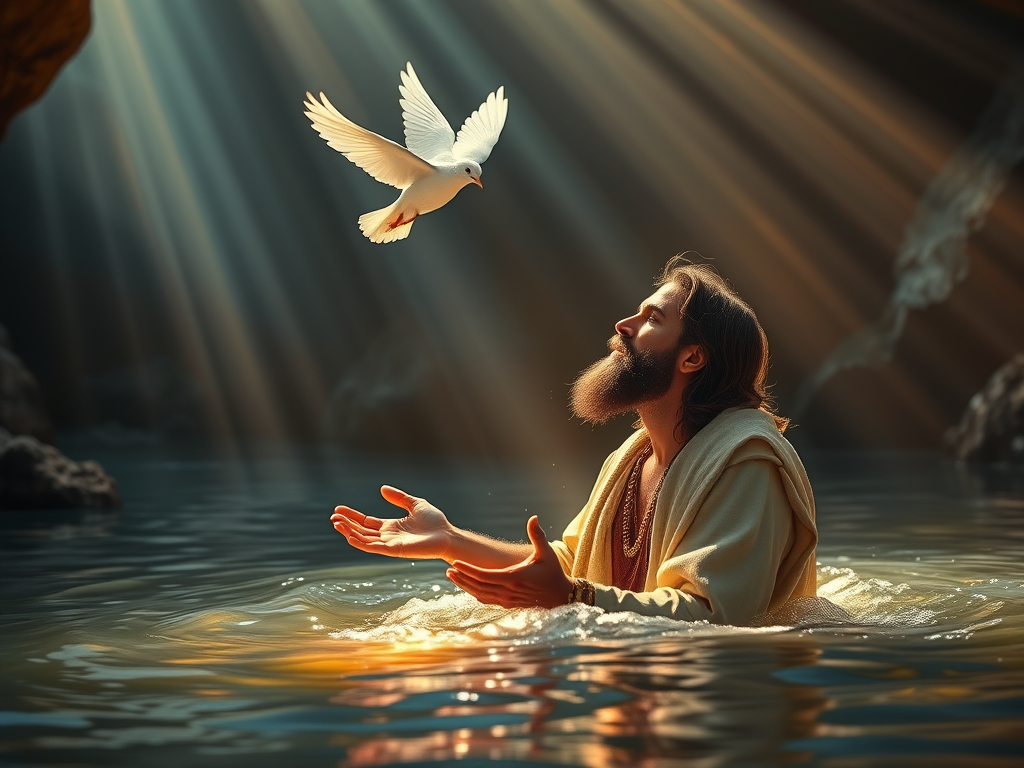
- At Jesus’ baptism, the Father speaks from heaven, the Son is baptized, and the Spirit descends like a dove (Matthew 3:16–17).
- Jesus commands baptism in the name (singular) of the Father, Son, and Holy Spirit (Matthew 28:19), showing equality and unity.
The church did not invent the Trinity—it recognized what was already revealed. As the Athanasian Creed declares: “We worship one God in Trinity, and Trinity in Unity; neither confounding the persons, nor dividing the substance.”¹
The Danger of Over-Explanation
Modern Christianity often tries to break the Trinity down into simple metaphors: water, egg, clover, roles of a man (father/son/husband). But these analogies fall short and often verge into heresies like modalism (the idea that God merely changes forms) or tritheism (three gods).
These errors arise when we prioritize human understanding over divine mystery. In doing so, we tame God, making Him seem more like us than He really is.
Dietrich Bonhoeffer warned of this tendency when he said:
“A God who is comprehensible is no God.”²
If we fully understood every detail about God, then He would be no more transcendent than a math equation. But Christianity teaches that our God is not only loving and present but also mysterious and infinite.
Why Mystery Is Good for the Soul
Worship requires awe. Awe requires something beyond us. The Trinity is not a puzzle to be solved but a personhood to be worshipped.
When we accept the mystery of the Trinity:
- We see a relational God, always existing in love, never alone (John 17:24).
- We experience unity and diversity in perfect harmony, a model for human relationships and the church.
- We realize that salvation itself is a Trinitarian act: the Father sends the Son, the Son redeems, and the Spirit regenerates (Ephesians 1:3–14).
It is good that we cannot wrap our minds around God, because that means our God is not small. If you could understand everything about Him, then you might be tempted to control Him, or worse—stop seeking Him altogether. But because He is eternal, infinite, and triune, He is worth our endless wonder and lifelong pursuit.
Embracing the Mystery in Worship
Instead of diagrams and illustrations, the church should lean into doxology—the worship of God as He is, not just as we understand Him.
Paul’s response to divine mystery is not to explain, but to exalt:
“Oh, the depth of the riches and wisdom and knowledge of God! How unsearchable are his judgments and how inscrutable his ways!”
— Romans 11:33 (ESV)
Worship is not hindered by mystery; it is deepened by it. We don’t worship a system—we worship a living God, revealed as Father, Son, and Spirit.

A Prayer to the Holy Trinity
O Triune God—Father, Son, and Holy Spirit—
We bow before You, not to dissect You, but to adore You.
You are holy in Your unity and majestic in Your diversity.
You created us in love, redeemed us by grace, and dwell in us through power.
We confess our arrogance when we demand explanations.
We confess our idolatry when we try to shrink You into our categories.
Teach us to love the mystery of who You are.
Teach us to worship not what we can fully grasp,
but what we can wholly trust.
May our minds be stretched,
our hearts be warmed,
and our souls be lifted
by the eternal dance of love within You.
Glory be to the Father,
and to the Son,
and to the Holy Spirit—
as it was in the beginning, is now, and ever shall be, world without end.
Amen.
Footnotes
- Athanasian Creed. Christian Classics Ethereal Library. Accessed July 9, 2025. https://www.ccel.org/creeds/athanasian.creed.html
- Dietrich Bonhoeffer, Letters and Papers from Prison, trans. Eberhard Bethge (New York: Touchstone, 1997), 311.
- Kevin J. Vanhoozer, Remythologizing Theology: Divine Action, Passion, and Authorship (Cambridge: Cambridge University Press, 2010), 154.

 R-Rated Religion