
List three books that have had an impact on you. Why?
The Unseen Realm by Michael Heiser
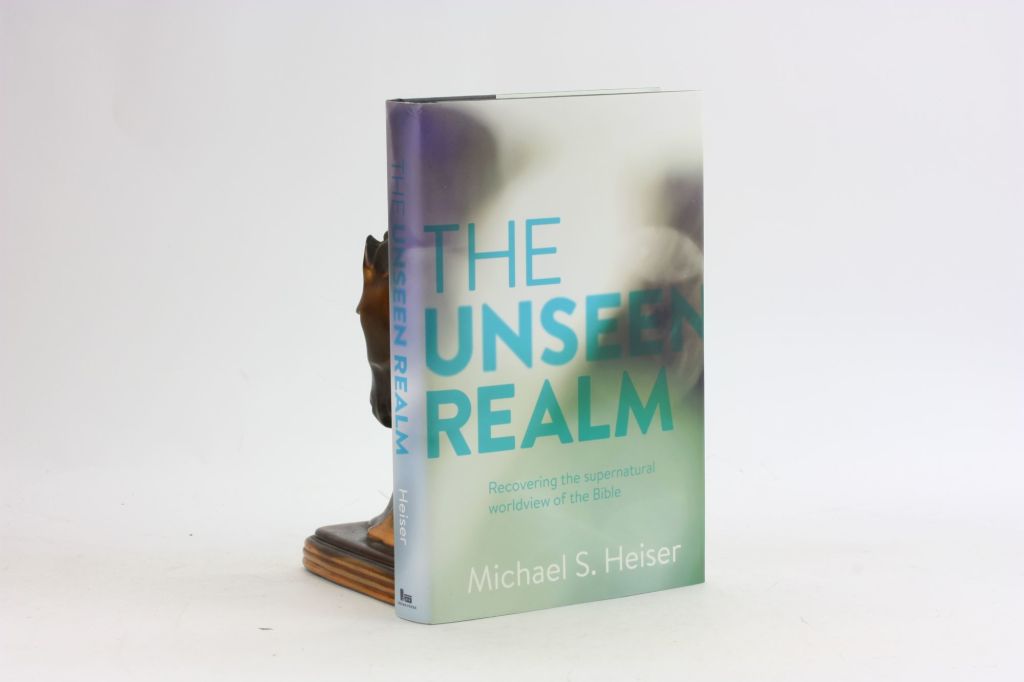
Michael Heiser’s The Unseen Realm offers a groundbreaking and eye-opening exploration of the supernatural worldview found in the Bible. Drawing from ancient Near Eastern context and rigorous scholarship, Heiser helps readers rediscover familiar scriptures in an entirely new light. His central thesis—that understanding the Bible’s divine council worldview is key to grasping many puzzling biblical passages—is both compelling and well-argued.
What sets this book apart is Heiser’s ability to make complex theological and linguistic concepts accessible without oversimplifying. He invites readers into a deeper study of Scripture, encouraging them to wrestle with uncomfortable but important truths that have often been glossed over or ignored in modern theology.
For anyone interested in biblical studies, theology, or deepening their understanding of the spiritual realm described in Scripture, The Unseen Realm is a thought-provoking and transformative read.
Scam: How the Black Leadership Exploits Black America by Jesse Lee Peterson
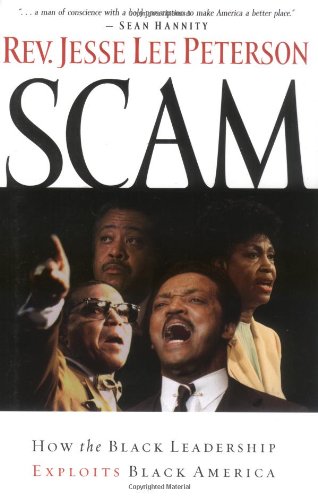
In Scam, Jesse Lee Peterson delivers a provocative and passionate critique of what he sees as the failures of mainstream Black leadership in America. With boldness and personal conviction, Peterson challenges narratives that, in his view, have kept many Black Americans trapped in cycles of dependency, anger, and division.
While the book is controversial, its core message encourages a rethinking of how race, personal responsibility, and leadership intersect in the Black community. Peterson shares powerful personal anecdotes and draws on decades of experience working with families, youth, and communities to make the case for values like forgiveness, self-reliance, and moral clarity.
What makes Scam valuable in the conversation about race relations is its raw honesty and willingness to confront uncomfortable truths. Whether or not readers agree with all of Peterson’s conclusions, the book offers a unique perspective that challenges prevailing assumptions and invites deeper reflection on what true empowerment for Black Americans might look like.
This is a thought-provoking read for anyone interested in race, leadership, and social change in America.
Dark Agenda: The War to Destroy Christian America by David Horowitz
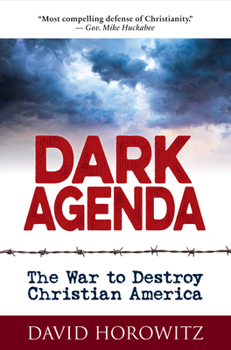
Dark Agenda by David Horowitz is a powerful and urgent warning about the growing hostility toward Christianity in modern American society. A former atheist and political insider, Horowitz brings a unique perspective as he exposes how secular ideologies and political movements have worked to marginalize religious values, silence believers, and erode the nation’s Judeo-Christian foundations.
What makes this book especially compelling is its accessible, fact-driven narrative that traces the roots of anti-Christian sentiment and how it has infiltrated education, media, government, and culture. Horowitz argues that many Christians remain unaware of the full scope of the threats they face, making his message all the more timely and necessary.
Dark Agenda is more than a political exposé—it’s a wake-up call for Christians to recognize the spiritual and cultural battles shaping the future of the country. It’s a must-read for believers who care about religious liberty, moral clarity, and the preservation of America’s founding principles.

 R-Rated Religion
Charm School by Nelson DeMille, who’s long gone now. Why, because it triggered patriotism and awe for our brave soldiers.
LikeLike
The mitzva of observing Torah commandments לשמה within the borders of the oath sworn brit lands, the inheritance of the Chosen Cohen people.
[[[ Within the covenantal framework that you so powerfully defend, how do you see the role of individual conscience? Not as a competing system, but as a faculty formed by oath remembrance and living Torah? I[[[ Within the covenantal framework that you so powerfully defend, how do you see the role of individual conscience? Not as a competing system, but as a faculty formed by oath remembrance and living Torah? In a world saturated with propaganda and revisionism, what disciplines shape that conscience to remain true to Sinai? ]]]
The Books of שמות וויקרא concentrate on the avodat HaShem of dedicating korbanot. This “service” does not exist as offering up a barbeque unto Heaven. The mitzva of the פרט case of Moshiach learns from the כלל of korbanot services of the House of Aaron.
Another בנין אב-precedent, the כלל for faith: צדק צדק תרדוף. Still another פרט-בנין אב precedent: the court case of Hebrew slaves vs. the State of Par’o – beating slaves for their rebellion to meet their brick production quota consequent to Par’o withholding the required straw.
One other בנין אב-precedent learns from the כלל that all ברכות require שם ומלכות.
Just as a korban requires a dedication to achieve a specific specified purpose, so too the mitzva of Moshiach. Specifically in the mitzva case dedication of Moshiach, this dedicated “king” sanctified לשמה to rule the land with Judicial justice, working through the common law lateral Sanhedrin courtrooms. Based upon the Torah Constitutional mandate that the Sanhedrin courts operate through משנה תורה-Legislative Review of any and all statute laws or bureaucratic regulations imposed by the Monarchy and/or his government.
The often repeated rebuke which the Book of Shmuel makes upon the House of David as Moshiach, the injustice shown to the husband of Bat Sheva. This פרט-specific defines the כלל dedication of the mitzva dedication of Moshiach. No such dedication for the mitzva of Moshiach to become a substitute theology which has some mythical theologically based messiah to replace the chosen Cohen People.
The opening word of the Torah בראשית, through the aggadic stories of the Creation, teaches the k’vanna of tohor time-oriented commandments; as the Av of the תולדות secondary source positive and negative commandments located specifically in the Books of שמות ויקרא ובמדבר. Hence just as the Book of בראשית introduces the Avot Avraham Yitzak and Yaacov, this opening first Book of the Torah introduces Av tohor time-oriented commandments which the rest of the Books of the Torah come to clarify.
For example: what separates tohor spirits from tumah spirits? Avodat HaShem in the Mishkan, only served in the state of tohor middot. For a Cohen to serve within the Mishkan in a condition of tumah middot – this Av transgression carries the din of כרת. Cutting off that person and his children from the oath brit wherein HaShem and the Avot mutually swore to create the chosen Cohen people יש מאין. This latter בראשית most essential idea shares nothing with tuma middot which promote racial or genetic inheritance of the Jewish race – as the Xtian church and Nazis promote – examples of tumah middot.
Hence to swear a Torah oath requires שם ומלכות like as do all ברכות from the Torah. The sin of the Golden Calf – a substitute theology which replaces the revelation of the 1st Sinai commandment revelation of the Spirit Divine Presence Name unto other word-Gods. Avoda zara by definition worships other Word-gods. The sin of the Golden Calf serves as the defining פרט for the 2nd Sinai Commandment כלל not to worship other Gods.
Therefore all Torah oath britot require שם ומלכות. The Name clearly directly links to the Spirit Divine Presence Name revealed in the first Sinai commandment. The term מלך refers to the כלל mitzva of the dedication of the spirit of משיח as expressed through all tohor time oriented Av commandments … the righteous pursuit of justice to achieve shalom among the chosen Cohen people throughout the generations in all Ages and times while Jews rule our ancient homelands.
מלכות understood as the dedication of defined tohor middot. אל remembrance of the Sin of the Golden Calf. רחום the inference which turns pity upon its head. Obliterating the Canaanites, the killing of the minor stubborn and rebellious child, the war against Amalek (Jewish assimilation to foreign cultures and customs of peoples who do not accept the revelation of the Torah at Sinai. And intermarriage with such Goyim). The middah of רחום a Jew dedicates how he shall socially interact with both his people and Goyim in the future; specifically through the dedication of defined tohor middot. חנון the general dedication to dedicate all future behavioral patterns with family friends, people, and even Goyim by and through the future born tohor middot that a person dedicates whenever that Jews does Torah or Talmudic mitzvot/halachot.
Both Xtianity and Islam worship other Word-gods. Therefore both religions do not define faith as the pursuit of justice, but rather belief in the theologies about these Word-gods.
[[[ Also, when you speak of the erasure of Jewish self-determination through revisionist Palestinian narratives, I hear both an intellectual rebuttal and a deep historical wound. Is your critique aimed primarily at the political manipulation of language and borders—or also at the erasure of Jewish covenantal memory from the land itself? ]]]
Unlike the Xtian and Muslims theologies which promote some pie in the sky Universal Monotheism God, the revelation of the Torah at Sinai revealed the local tribal God of Israel. When David fled from king Shaul he declared as he entered g’lut lands: “I have been forced to abandon God”. Just as the Great and Small Sanhedrin courts only have jurisdiction within the borders of the Jewish state so too the local God of Israel. Herein the answer given to the Holocaust survivor who said to me: “I was in Auschwitz, Where was God?” When I lived in the US and Xtian people asked me if I was a religious Jew? I responded with: I am an atheist praise God. But even living within the borders of the oath sworn brit alliance lands I habitually respond to Goyim with “I am an atheist – praise God”. Meaning, I do not believe in any theological/creed construct of Word-gods – praise God. LOL Torah, its deep and requires a sense of humor.
The curse of g’lut-exile of my people almost immediately caused Jews to lose the wisdom how to do mitzvot לשמה. G’lut Jewry does not understand how to employ and work our Yatrir HaTov within our hearts. The בנין אב-precedent of blowing the shofer serves as a פרט to define the כלל of Yatzir HaTov. Meaning, to blow a shofar requires air from the lungs. But to blow a spirit from the Yatzir HaTov within the heart requires the k’vanna, (all time-oriented commandments require k’vanna) the dedication of defined tohor middot spirits. This כללי-general idea of tohor middot, it defines the dedication of the middah of חנון.
Herein a definition of 3 of the 13 tohor middot which a person dedicates through Yatzir Tov k’vannot from within their hearts. Jews uprooted from our homelands by both the Babylonians and Romans caused the g’lut cursed survivors to lose this kabbalah wisdom which defines how to do mitzvot לשמה.
LikeLiked by 1 person