
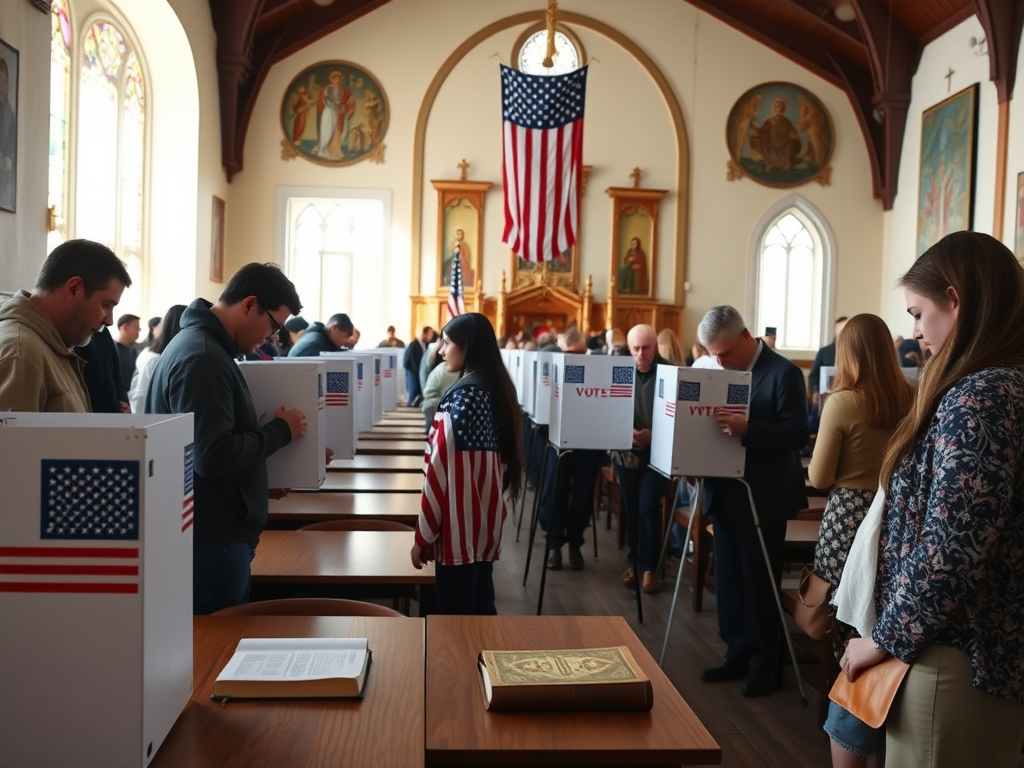
Do you vote in political elections?
Introduction
As Christians grounded in sound doctrine and tradition, we affirm that God has comprehensive sovereignty over all creation, including civil government. Our faith is not limited to Sunday mornings; it influences every aspect of our lives and shapes our understanding of citizenship and our engagement with the world. Scripture provides clear guidance on our civic responsibilities, reminding us that God Himself establishes governing authorities (Romans 13:1).
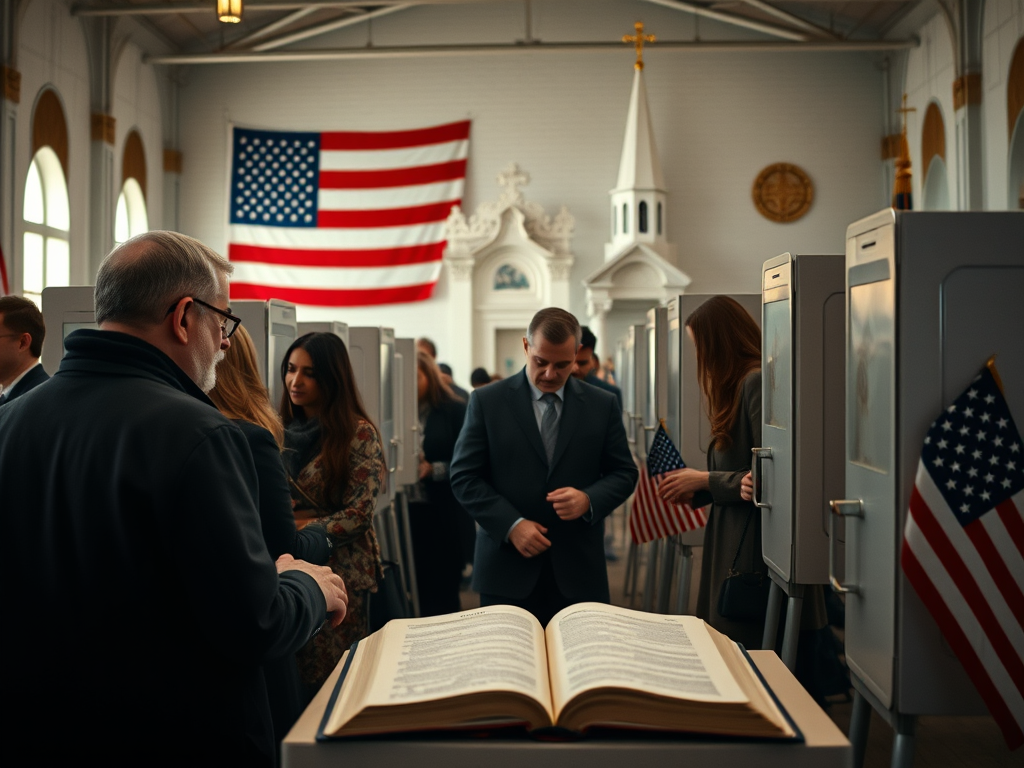
Christians not only have the right to vote in political elections, but I also believe they have a responsibility to do so. Faith-based communities should actively engage with important issues and cast their votes accordingly. It is in this arena that we should take the lead rather than simply follow. If we fail to influence our political landscape with biblical principles and values, we risk allowing secular or pagan influences to shape it for us.
Our Biblical Mandate for Civic Engagement
The Apostle Paul, writing under the inspiration of the Holy Spirit, instructs us in Romans 13:1-7 that “there is no authority except that which God has established.” These authorities are described as “God’s servants” (Romans 13:4, 6), ordained for the public good, to punish wrongdoing and commend those who do right. Therefore, submission to governing authorities, in all lawful things, is not merely a pragmatic necessity but a matter of conscience before God (Romans 13:5). This submission includes paying taxes, showing respect, and rendering honor where it is due (Romans 13:7).
Furthermore, Paul urges believers in 1 Timothy 2:1-2 to offer “requests, prayers, intercession, and thanksgiving… for all those in authority, that we may live peaceful and quiet lives in all godliness and holiness.” This instruction implies a responsibility not only to pray for our leaders but also to participate in the systems that select them, seeking leaders who will uphold an environment where godly living is possible. As the Reformed confessions state, civil government is ordained by God to maintain order and justice in society The Reformed Faith on Civil Government – Standard Bearer. While we obey the state, our ultimate allegiance is to God; should the state command disobedience to God’s Word, we must obey God rather than men (Acts 5:29) WCSK: Political Revolution in the Reformed Tradition, Two: Romans 13-14.

Concerning Trends: Apathy in the Pews
Despite this clear biblical mandate, recent data reveals a concerning decline in political participation among faith communities. Overall voter turnout dropped from 62% in 2020 to 55% in 2024 2024 Election Research – Report #2 – Arizona Christian University. The decline among self-identified Christians was even steeper, falling from 64% in 2020 to 56% in 2024 2024 Election Research – Report #2 – Arizona Christian University.
Research suggests that millions of eligible Christian voters are staying home. One study estimated that potentially 104 million faith voters, including 41 million born-again Christians and 32 million regular church attenders, were unlikely to vote in the 2024 election Apathy Among Christian Voters Could Be ‘Gamechanger’ in 2024 Election – Arizona Christian University. Why? Reasons cited include a lack of interest in politics (68%), dislike of candidates (57%), feeling candidates don’t reflect their views (55%), believing their vote won’t make a difference (52%), and distrust in the election process (48%) Apathy Among Christian Voters Could Be ‘Gamechanger’ in 2024 Election – Arizona Christian University. This disengagement represents a significant departure from our civic duty.
Why Vote? Protecting Faith, Freedom, and Values
Our participation in elections is crucial, particularly for the protection of religious freedom. The First Amendment guarantees the “free exercise” of religion, a fundamental right that allows individuals and groups to live out their faith Forum: Freedom for Religion – The Yale Law Journal. This isn’t merely tolerance; it’s a recognition that religious practice is valuable and that government should not interfere with it Forum: Freedom for Religion – The Yale Law Journal.
Voting allows us to choose representatives who understand and respect this principle – leaders who will work to ensure that government does not infringe upon the ability of citizens to act according to their sincerely held religious beliefs H.Res.94 – Protecting religious freedom in America. 117th Congress (2021-2022). When we vote according to biblical principles, we are seeking to influence government towards righteousness and justice, promoting laws that protect the vulnerable, uphold the sanctity of life, and allow the church to fulfill its mission without undue hindrance. Proverbs 14:34 reminds us, “Righteousness exalts a nation, but sin is a disgrace to any people.” Voting is one way we work towards that righteous exaltation.
The Role of Pastors and Sound Doctrine
Pastors have a vital role in equipping the saints for lives of faithfulness, which includes navigating their civic responsibilities. While churches must be careful not to engage in partisan politicking (which can jeopardize their non-profit status Faith in Elections Playbook – Interfaith America), pastors should preach the whole counsel of God, applying biblical truth to all areas of life, including government and citizenship.
This means teaching the biblical principles of justice, morality, stewardship, and the value of human life. It involves helping congregants develop a biblical worldview that informs how they evaluate candidates and political platforms. Sadly, research indicates a gap here: barely half (56%) of Christian churches encouraged congregants to vote in 2024, and fewer still (48%) provided materials on biblical perspectives related to key social issues Apathy Among Christian Voters Could Be ‘Gamechanger’ in 2024 Election – Arizona Christian University. Pastors must boldly disciple their flocks in biblical thinking, empowering them to engage the political process thoughtfully and faithfully, guided by Scripture and conscience, rather than by mere party loyalty or apathy.
A Renewed Call to Faithful Citizenship
The traditional understanding of God’s sovereignty does not lead to passive withdrawal from the world, but to active engagement under His authority. Participating in elections is a vital aspect of our Christian witness and civic duty. It is an opportunity to be salt and light (Matthew 5:13-16) in the public square, to advocate for righteousness, and to protect the freedoms necessary for the flourishing of faith and family.
Let us reject apathy and cynicism. Let us commit to being informed, prayerful voters who engage the political process not as partisans first, but as disciples of Christ seeking to honor Him in all things. Let us diligently exercise our right to vote, stewarding this responsibility for the glory of God and the good of our neighbors.
Conclusion
To believe in God and follow Jesus Christ as our Lord and Savior while ignoring the importance of voting in elections is an act of ingratitude. The New Testament was written in an atmosphere of political exclusion, which is part of what gives it its power. Most of the writers of the New Testament lived outside the political landscape; they were outsiders reshaping the moral foundations of society.
In contrast, we live in a time and place where this is no longer the case. Christians, as untapped voters, have the opportunity to bring our faith into political leadership and influence the future of our world while worshiping the God of the Holy Bible. We are not just privileged to engage in this process; by neglecting our civic duty, we are undermining our own faith.

 R-Rated Religion