

Yesterday, April 29th, was National Fentanyl Awareness Day. While we move on to a new day, the crisis highlighted by this day requires our continued attention, prayer, and action as Christians. The devastating effects of fentanyl poisoning across the United States are not just a secular issue; they challenge our commitment to cherish life, uphold justice, and exercise wisdom in a troubled world.
The Unseen Threat: Understanding Fentanyl’s Danger
The biggest issue with the fentanyl crisis is the lack of awareness regarding its importance and severity. This is a completely different challenge compared to previous generations in dealing with illegal drugs and their distribution. The younger generation, now affected by this crisis, is often unaware of the dangers posed by fentanyl. Many users spend time online, addicted to social media, and are ill-informed about the immediate risks of fentanyl poisoning. Young adults are largely disconnected from the reality of how dangerous this epidemic is, and many would be skeptical if you tried to warn them. The spread of misinformation and disinformation has disenfranchised youth and blurred the distinction between fact and fiction.
Fentanyl is a synthetic opioid, approved for legitimate medical use in treating severe pain, often after surgery or for advanced-stage cancer. It is incredibly potent – estimated to be 50 times stronger than heroin and 100 times stronger than morphine.^[1] However, the primary driver of the current crisis is illicitly manufactured fentanyl (IMF). This substance, often produced clandestinely, is flooding the illegal drug market due to its low cost and high potency.
The true insidious nature of IMF lies in its deceptive presence. It is frequently mixed with other illicit drugs like heroin, cocaine, and methamphetamine, or pressed into counterfeit pills made to look like legitimate prescription opioids (like OxyContin®, Vicodin®), or even benzodiazepines (like Xanax®).[2] Many individuals who die from fentanyl poisoning never intended to consume it; they are victims of deception, taking a substance they believed to be something else entirely. A minuscule amount, as little as two milligrams (equivalent to a few grains of salt), can be lethal.[1]
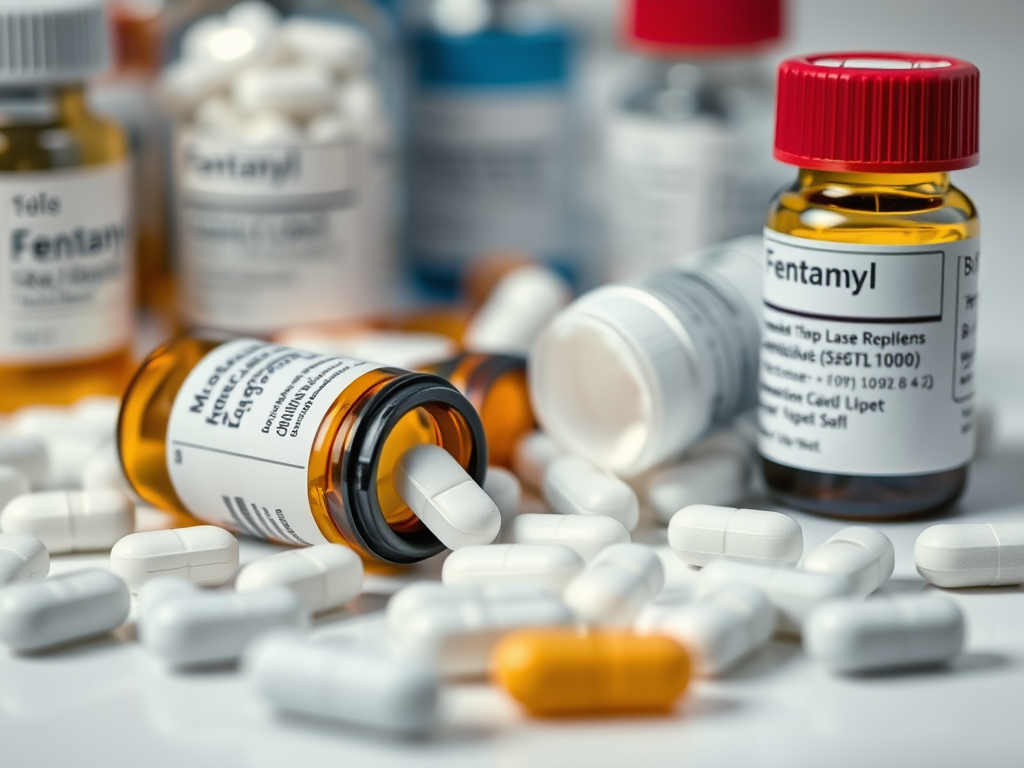
The Sobering Statistics
The numbers paint a grim picture of the toll fentanyl is taking on American lives:
- Synthetic opioids, primarily fentanyl, are now the main driver of drug overdose deaths in the United States.[3]
- In recent years, overdose deaths involving synthetic opioids have skyrocketed, reaching unprecedented levels, claiming tens of thousands of lives annually.[3, 4]
- Fentanyl is involved in more deaths of Americans under 50 than any other cause, including heart disease, cancer, homicide, suicide, and other accidents.[5]
- A significant percentage of counterfeit pills seized and tested by the DEA contain potentially lethal doses of fentanyl.[2]
A Christian Perspective: Life, Stewardship, and Sobriety
From a Christian perspective, grounded in Scripture, our response to this crisis is multifaceted:
- Sanctity of Life: We affirm that all human life is created in the image of God (Genesis 1:27) and is a precious gift. Fentanyl poisoning tragically cuts short lives imbued with divine dignity and purpose. Psalm 139 speaks of being “fearfully and wonderfully made,” underscoring the intrinsic value of each person whose life is lost to this scourge.
- Stewardship of the Body: Our bodies are temples of the Holy Spirit (1 Corinthians 6:19-20). This calls us to responsible stewardship, avoiding substances that harm, enslave, or destroy the physical life God has entrusted to us. The deceptive nature of fentanyl makes even unintentional illicit drug use potentially fatal, highlighting the inherent dangers in seeking highs outside of God’s design.
- Call to Sobriety and Vigilance: Scripture repeatedly warns against drunkenness and calls for clear-mindedness. “Be sober-minded; be watchful. Your adversary the devil prowls around like a roaring lion, seeking someone to devour” (1 Peter 5:8, ESV). While addressing spiritual vigilance, this principle extends to avoiding substances that impair judgment, lower inhibitions, and can lead directly to physical destruction, especially when lethal poisons like fentanyl are involved. Ephesians 5:18 commands us, “…do not get drunk with wine, for that is debauchery, but be filled with the Spirit.” This directs us toward God, not chemical escapes, for fulfillment.
- Compassion and Restoration: While we condemn the sin associated with drug abuse and trafficking, we are called to compassion for those struggling with addiction and those grieving unimaginable loss. We should follow the admonition in Galatians 6:1-2 (ESV): “Brothers, if anyone is caught in any transgression, you who are spiritual should restore him in a spirit of gentleness… Bear one another’s burdens, and so fulfill the law of Christ.” This includes supporting recovery efforts and ministering to the brokenhearted.
Addressing the Source and the Debate on Legalization
We must acknowledge the geopolitical realities of this crisis. Law enforcement and intelligence agencies consistently point to precursor chemicals originating largely from China, which are then synthesized into fentanyl by transnational criminal organizations, primarily Mexican cartels, and trafficked across the border into the United States.[2, 6] This constitutes an assault on our communities that demands robust law enforcement and diplomatic pressure.
Furthermore, this crisis forces Christians to confront arguments for the broad legalization of drugs. While nuances exist regarding decriminalization for possession versus legalization of production and sale, the devastating effects of potent substances like fentanyl serve as a stark warning. From a biblical viewpoint, God institutes government to restrain evil and promote public good (Romans 13:1-4). Legalizing substances known to cause widespread death, destroy families, and fuel addiction runs counter to this mandate. Advocating for the legal availability of poisons like illicit fentanyl, even under regulatory frameworks, ignores the biblical call to protect the vulnerable and uphold societal well-being. Compassion for the addicted does not equate to endorsing or facilitating access to the substances destroying their lives. Christians should advocate for policies rooted in wisdom, justice, and the preservation of life, which includes restricting access to inherently destructive drugs like fentanyl.
A Call to Prayer and Action
As the body of Christ, let us:
- Pray: Pray for the victims of fentanyl poisoning and their grieving families. Pray for those trapped in addiction, that they may find freedom and restoration in Christ. Pray for law enforcement, healthcare workers, and policymakers grappling with this crisis. Pray for wisdom and courage for our leaders to address both the supply from international sources and the demand within our borders.
- Educate: Raise awareness within our churches and communities about the specific dangers of fentanyl and the reality of counterfeit pills. Knowledge can save lives.
- Support: Support ministries and programs that offer effective, Christ-centered addiction recovery and provide aid to those affected by the crisis.
- Advocate: Engage policymakers, advocating for solutions that uphold justice, protect life, and offer pathways to recovery, while firmly opposing the normalization or legalization of deadly substances like fentanyl.
The fentanyl crisis represents a profound tragedy, highlighting a world suffering under the weight of sin. However, we are not without hope. Our hope lies in Christ, who offers redemption, healing, and ultimate victory over death. Let us confront this crisis with awareness of its dangers, compassion in our hearts, and a steadfast commitment to the biblical principles of life, stewardship, and justice.
O blessed Lord, you ministered to all who came to you: Look with compassion upon those who through addiction have lost their health and freedom. Restore to them the assurance of your unfailing mercy; remove from them the fears that beset them; strengthen them in the work of their recovery; and to those who minister to them, give patient understanding and persevering love; through Jesus Christ our Lord. Amen.
For Those in Bondage to Addiction
Footnotes:
[1] Drug Enforcement Administration (DEA). (n.d.). Fentanyl Fact Sheet. Retrieved from https://www.google.com/search?q=https://www.dea.gov/resources/fact-sheets/fentanyl
[2] Drug Enforcement Administration (DEA). (2022). One Pill Can Kill Public Safety Alert. Retrieved from https://www.dea.gov/onepill
[3] Centers for Disease Control and Prevention (CDC), National Center for Health Statistics (NCHS). (Data varies by year, reference most recent available reports, e.g., Provisional Drug Overdose Death Counts). Retrieved from https://www.cdc.gov/nchs/nvss/vsrr/drug-overdose-data.htm
[4] Ahmad FB, Cisewski JA, Rossen LM, Sutton P. (2023). Provisional Drug Overdose Death Counts. National Center for Health Statistics.
[5] Families Against Fentanyl. (Analysis based on CDC data). Fentanyl: The State We’re In. Retrieved from https://www.familiesagainstfentanyl.org/ (Note: Verify specific claim/date range from source reports if possible).
[6] U.S. Department of State. (Various reports and statements on counternarcotics cooperation and challenges). See also reports from Congressional Research Service (CRS) on fentanyl trafficking.

 R-Rated Religion
I really admire how you tell stories with such grace and insight. Your posts always leave me thinking and feeling inspired. Thank you for showing up with your truth and helping others do the same. You’re a light in the writing world, and I’m so glad I found your blog!
LikeLiked by 1 person