
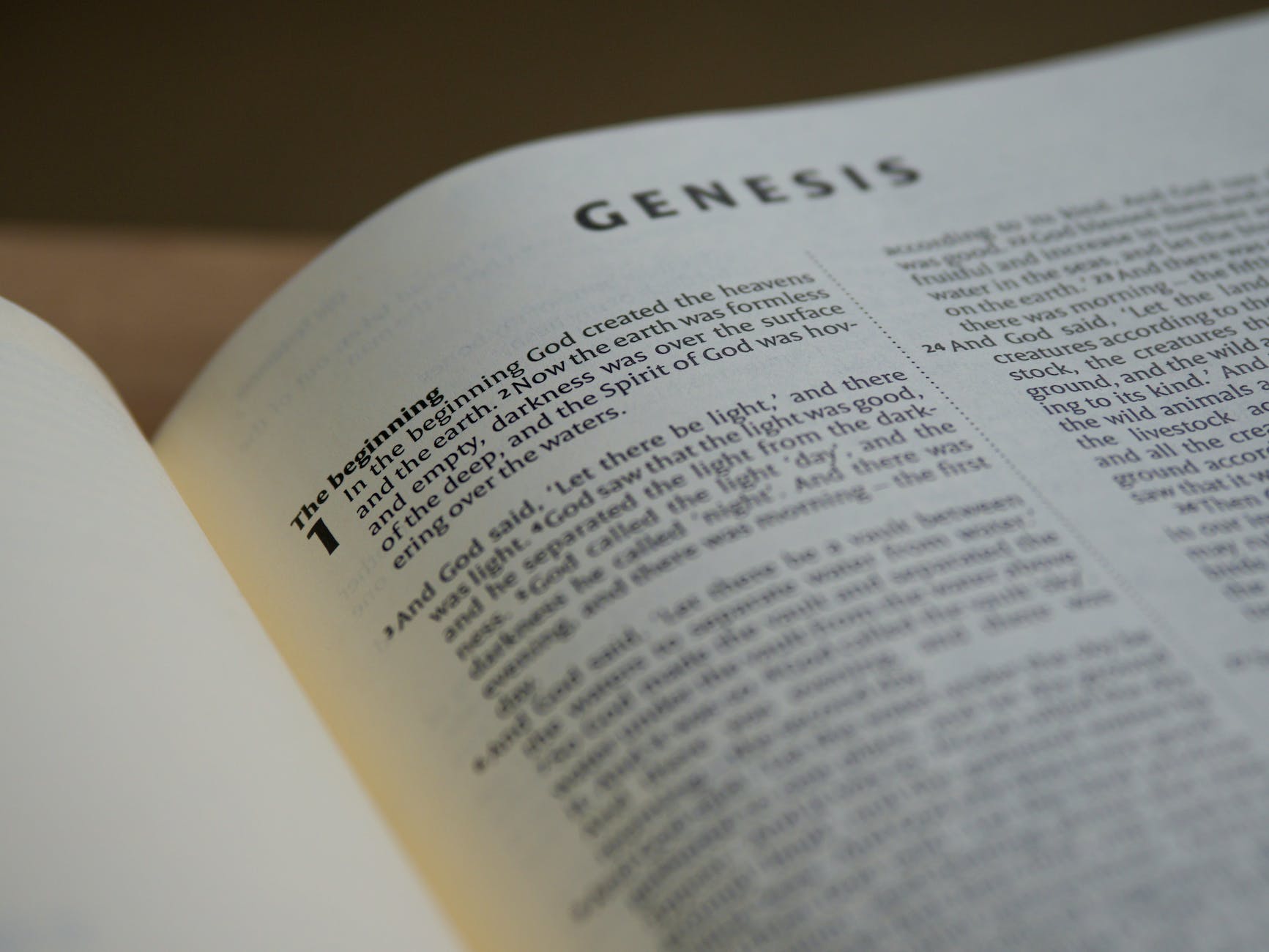
The premise of this question is based solely on the fall of Adam and Eve. It puts the history of Evil on the shoulders of one incident in Genesis 3. I believe that theology has missed the mark concerning this fall and sin. It is incorrect to view sin, and its origins by only viewing the fall in the garden. The correct understanding of sin and its origins would be better understood by looking at the framework of Genesis and how ancient Israelites would have viewed this situation.
I think it is best understood to think of the Bible as something made for us but not written to us. To understand the intentions of the writer of Genesis 3 would be from the viewpoint of Jewish antiquity and theology. Genesis can be broken up into two parts; Genesis 1 through 11, is known as primeval history. “Genesis 1–11 is covering thousands of years. The view is very panoramic. It’s like using a wide-angle lens.”1 The rest of Genesis 12-50; known as patriarchal history, is what results from what happened in chapters 1 through 11.
From this viewpoint of second temple Judaism, ancient Jewish religion would have viewed man’s fall as three distinct falls: the first in Eden, the second with Noah, and the third being the Babel incident.2 This sets up the framework for the rest of the Bible and it gives a much clearer explanation for sin. Far too much emphasis and theology have been placed on the shoulders of Adam and Eve, although their contribution is significant. What tends to be left out and overlooked is the theological and hamartiological implications of the watchers, the flood, and the Babel incidents which shape God’s call of Abraham starting in Genesis 12.
As for Romans 5, I understand the reformed position, but I think they overstate Paul’s polemic here. “For Paul, Adam and Christ serve as representative heads over two groups of people. Paul emphasizes that Adam’s trespass brought death to all who belong to him. By contrast, those who belong to Christ receive the free gift of grace.”3 I am a strong proponent of theology and this is where my love lies; however, like so often happens, man’s desire to fully comprehend how God does what he does leads to chasms that divide religions and lead people away from Christ’s true gospel. The intentions of the writer or writers of Genesis was a narrative pointing to God’s establishment of the Jewish faith. Sin just happens to be a large component of that and is laid out, in detail, throughout all of Genesis but post-modern theologians still seem to be only looking in Genesis 3 for the answers.
However, consider the fact that humanity did not “fall.” After the transgression (Paul’s distinct language in Romans 5 and 1 Timothy 2:14), Adam and Eve were “like us,” according to God who was speaking (Genesis 3:22). How does one “fall” when they have become like God? In light of this statement from God in 3:22 and what follows, how does the entrance of death change human capabilities?
Maybe I just disagree with the premise of the question. Adam and Eve did fall, maybe not in the strictest definition. A transgression against the will of God is a sin; “wrong, iniquity, i.e., that which is an offense against a standard,”4 which God expands upon as man continues to transgress. The point is not what happened but the consequences of what happened. God needed to judge against transgression, and he kicked Adam and Eve out of the garden lest they live forever (Gen 3:22). This banishment meant that Mankind had to learn to die, hence the wages of sin is death (Romans 6:23). It is the result of this transgression that cause the decaying nature of humanity. Man was now, a dead man walking; the whole of man. This is what reformists refer to as total depravity or what R. C. Sproul re-coins as radical corruption; “It means that the fall was so serious that it affects the whole person. The fallenness that captures and grips our human nature affects our bodies; that’s why we become ill and die.”5 This is why we are now called to be one with the triune God. This Holy Spirit now imbues his perfect essence in us at our acceptance of his grace and we become transformed. However, our sinful nature is rooted to the core that we cannot possibly be conformed to our good but the perfection of the Holy Spirit that now resides in each saint. We are now in the process of being conformed to him (Christ Jesus) through the process of sanctification. That fallen nature is integral to understanding the need and capability of spiritual formation.
Footnotes:
1 Mark D. Futato, OT101 Introducing the Old Testament: Its Structure and Story, Logos Mobile Education (Bellingham, WA: Lexham Press, 2013).
2 This is the framework behind Divine Council Theology as described in Michael S. Heiser, Unseen Realm (Bellingham, WA: Lexham Press, 2015).
3 John D. Barry et al., Faithlife Study Bible (Bellingham, WA: Lexham Press, 2012, 2016), Ro 5:15.
4 James Swanson, Dictionary of Biblical Languages with Semantic Domains : Hebrew (Old Testament) (Oak Harbor: Logos Research Systems, Inc., 1997).
5 R. C. Sproul, “TULIP and Reformed Theology: Total Depravity,” Ligonier Ministries, March 25, 2017, https://www.ligonier.org/blog/tulip-and-reformed-theology-total-depravity/.

 R-Rated Religion